

Bingham University 13Th Inaugural Lecture - “Unbundling The Burden Of Proof In Election Petition Cases: Law, Democracy And The Search For Electoral Justice.
Published on: Jul 2nd, 2026
The Vice-Chancellor Prof. Haruna Kuje Ayuba in his welcome remarks said the lecture was incredibly timely because of the burden of proof in election petition cases which often poses significant challenges, delays, ambiguities, procedural hurdles and sometimes injustices that threaten the very foundation of electoral legitimacy and undermine public confidence in the electoral system.
He stated that as Nigeria prepares for the 2027 elections, addressing these issues is not just an academic exercise but a practical necessity to ensure a fair, transparent, and credible electoral process. He congratulated Prof. Dura for bringing a vital issue to the forefront and said the lecture underscores the Faculty of Law’s commitment to engaging pressing legal and societal issues.
The13th Inaugural Lecture held at the Faculty of Architecture Lecture auditorium was delivered by Prof. Magdalyne Mbadzendan Dura, Dean of the Faculty of Law and Professor of Constitutional Law and Jurisprudence.
In her lecture titled “Unbundling the Burden of Proof in Election Petition Cases: Law, Democracy and the Search for Electoral Justice in Nigeria,” Prof. Dura mounted a forensic critique of Nigeria’s electoral adjudication framework. She argued that existing legal and procedural barriers have made it exceedingly difficult for aggrieved candidates and voters to successfully challenge disputed outcomes. She said the current system often compels petitioners to prove electoral malpractices under practically impossible conditions, especially within the limited timeframe provided by law. The great questions of electoral law do not originate in courtrooms or legislative chambers; they originate in the lived democratic experiences of citizens who participate in elections and seek justice when they believe that process has been compromised.
Prof. Dura described the burden of proof as one of the greatest obstacles to electoral accountability, noting that many petitions fail not because allegations are untrue, but because evidentiary rules are structured against petitioners. She stated that the Constitution makes a covenant with every citizen who casts a vote, that the vote will count, that the declared result will reflect that vote, and that where it does not, the courts will hear and correct. The burden of proof is either the operational expression of that covenant or its operational betrayal.
The scholar called for sweeping reforms involving all stakeholders. To the Supreme Court, she argued for the adoption of a more balanced “clear and convincing” evidentiary standard for corrupt practices. She also demanded that INEC be placed under a positive legal obligation to proactively disclose election materials.
To the National Assembly, she said the Electoral Act 2026 must be used to close persistent gaps, including restoring S.137, introducing scaled filing windows, and enacting clear rules for BVAS and IReV data. To INEC, she prescribed preservation of records, clear disclosure protocols, compliance with tribunal directives, and a technological accountability framework. “Electoral technology is not credible because it was deployed. It is credible because citizens and courts can independently verify it,” she stressed. She further highlighted that the Bar must litigate differently, the Bench must reason differently, the Legislature must legislate differently and INEC must administer differently.
Secretary to the Government of the Federation, Senator George Akume, CON, represented by the Permanent Secretary on Political and Economic Affairs, Warrens B. Augusta, former Benue State Governor, Chief Samuel Ortom; former Senate President, Dr. Iyorchia Ayu; and constitutional lawyer, Dr. James Onoja, SAN, in their goodwill messages hailed the presentation as a timely intervention in Nigeria’s quest for credible elections.
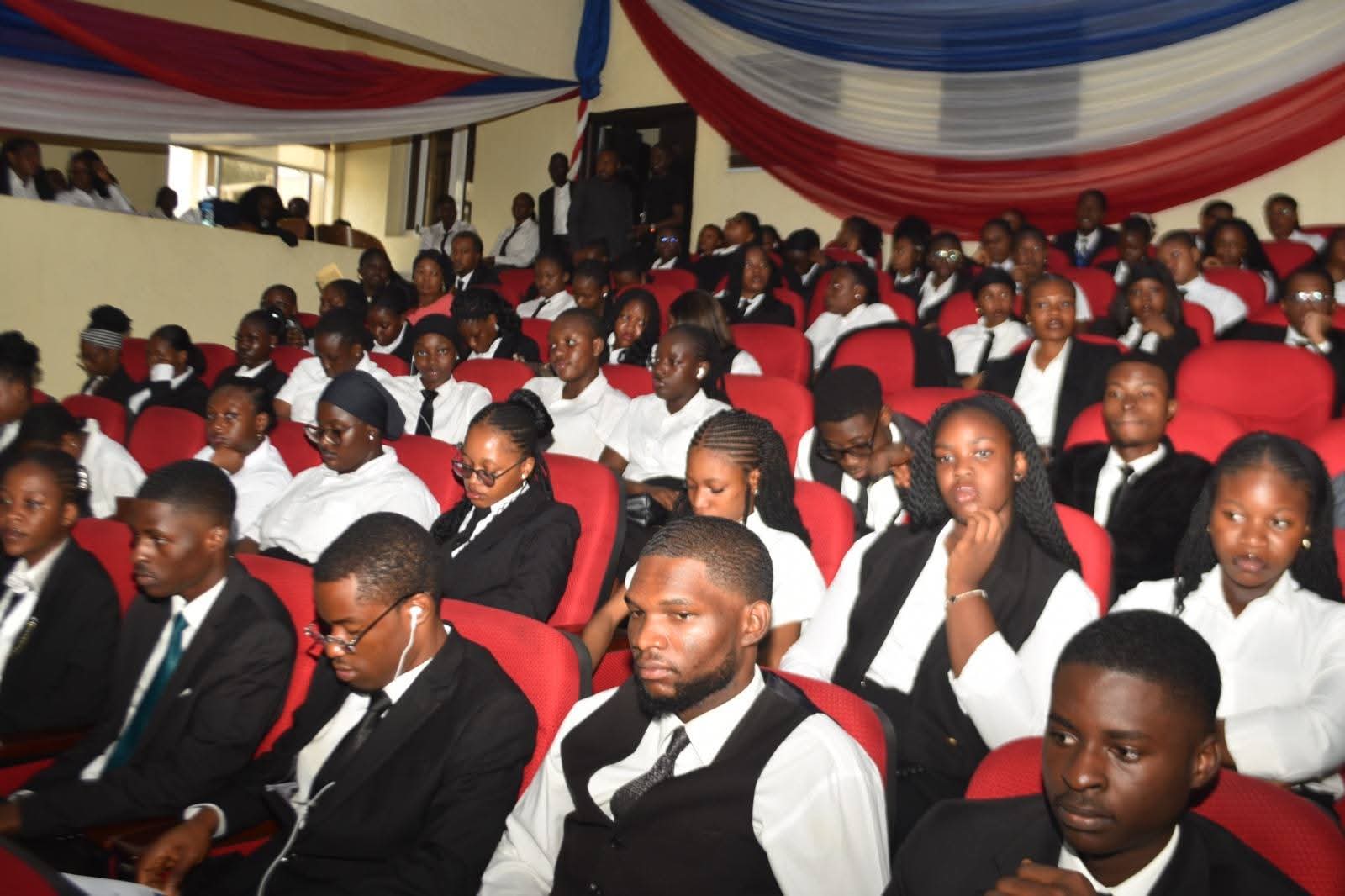
The inaugural lecture drew Academics, Politicians, Lawyers, former and present Government officials, Vice-Chancellors from Benue state university and the University of Mkar, Traditional rulers, students, stakeholders, and members of the press across the country.
With this 13th inaugural lecture, Bingham University continues to reinforce its role as a hub for research-driven discourse on Nigeria’s legal and democratic challenges. The highlights were the presentations of the lecture booklet, plaque and photo sessions.
.........................................................
Directorate of Public Affairs
Office of the Vice-Chancellor
Bingham University